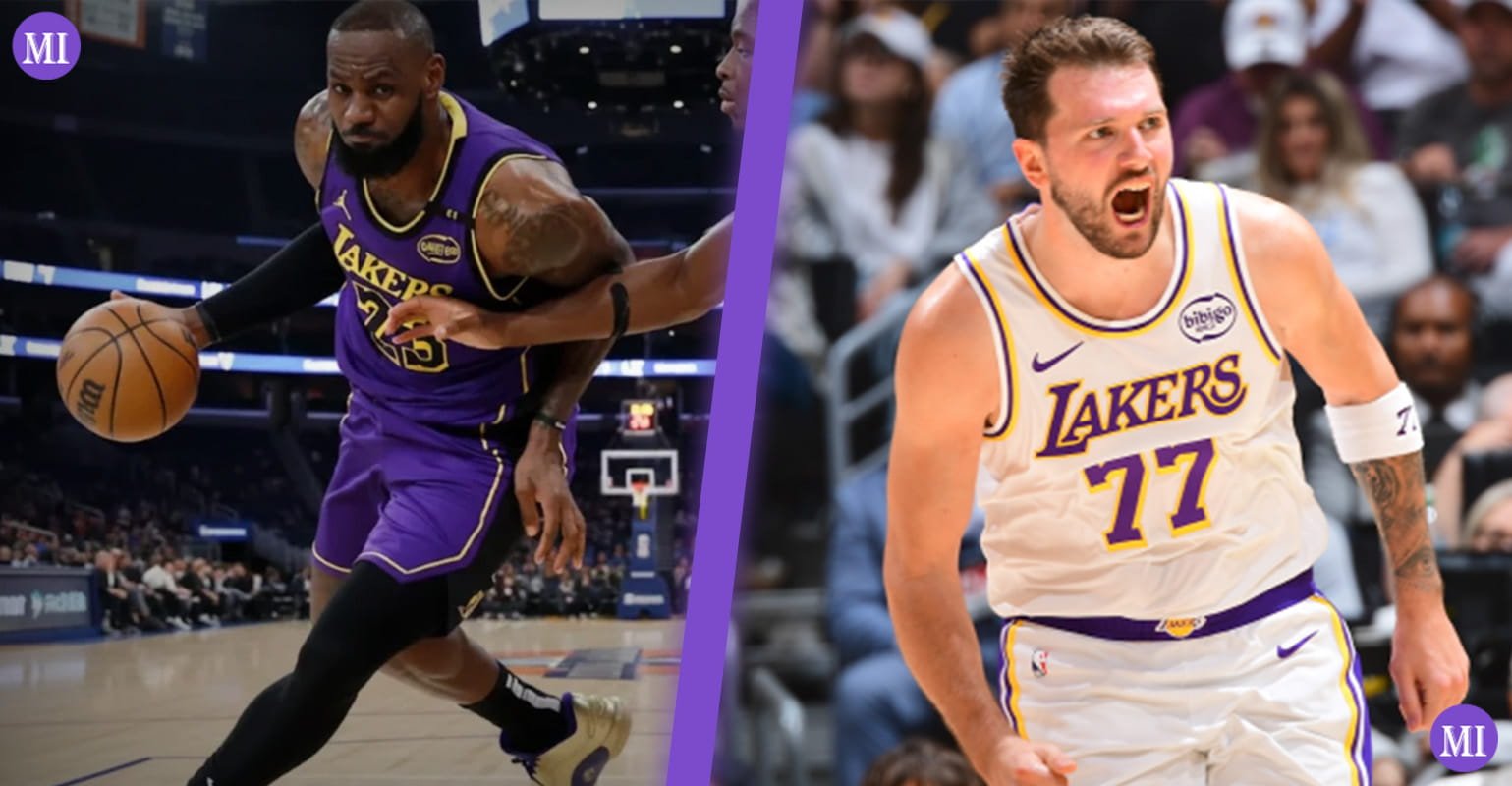
The New York Knicks vs Los Angeles Lakers match player stats always attract attention from basketball fans around the world. When two iconic NBA franchises meet, the game becomes more than just a regular-season matchup. It turns into a showcase of talent, strategy, and star power. The rivalry may not be traditional in the sense of division competition, but the history and popularity of both teams make every matchup exciting.
The New York Knicks represent the heart of basketball in New York City. They play with intensity, strong defense, and a passionate fan base behind them. On the other side, the Los Angeles Lakers symbolize Hollywood basketball. Their history is filled with legends, championships, and unforgettable moments. Whenever these two teams step onto the court together, fans expect a thrilling game.
In this detailed breakdown, we will explore the New York Knicks vs Los Angeles Lakers match player stats, analyze team strategies, review standout performances, and examine how individual players influenced the outcome of the game. From scoring leaders to defensive contributions, every key moment and statistic helps tell the story of this exciting matchup.
Match Bio Table
| Key Detail | Information |
|---|---|
| Game | New York Knicks vs Los Angeles Lakers |
| League | National Basketball Association (NBA) |
| Venue | Madison Square Garden / Crypto.com Arena |
| Game Type | Regular Season Matchup |
| Teams | New York Knicks and Los Angeles Lakers |
| Focus | Player Statistics and Performance |
| Key Metrics | Points, Assists, Rebounds, Steals, Blocks |
| Top Performers | Star players from both teams |
| Game Importance | Interconference Matchup |
| Audience | Global NBA Fans |
| Game Style | Offensive Pace with Strong Defense |
| Analysis Type | Statistical Breakdown and Performance Review |
Team Performance Overview
New York Knicks Strategy and Execution
The New York Knicks entered the matchup with a clear defensive-focused game plan. Their main goal was to control the pace of the game, protect the paint, and limit fast-break opportunities for the Los Angeles Lakers. Over recent seasons, the Knicks have built a reputation for disciplined rotations, strong interior defense, and physical play traits that were evident from the opening tip.
Early Game Execution
In the first quarter, the Knicks quickly established momentum. Their offense emphasized ball movement, smart spacing, and creating open shots around the perimeter. By circulating the ball efficiently, they avoided forcing difficult attempts and generated high-percentage scoring opportunities. This patient approach allowed them to take an early lead and set the tone for the game.
Rebounding also played a critical role in the Knicks’ early success. Offensive boards created second-chance scoring opportunities, keeping constant pressure on the Lakers’ defense. Defensive rebounds prevented transition points, which aligned with their strategy of limiting the Lakers’ fast-break efficiency.
Mid-Game Challenges
The third quarter posed significant challenges for the Knicks. The Lakers increased their tempo and applied aggressive defensive pressure, forcing turnovers and rushed possessions. This disrupted the Knicks’ offensive rhythm and allowed the Lakers to seize control of momentum. The Knicks struggled to maintain the same level of efficiency, particularly in converting contested shots under defensive pressure.
Fourth Quarter Resilience
Despite these setbacks, the Knicks demonstrated resilience in the fourth quarter. Their defensive rotations tightened, reducing easy scoring opportunities for the Lakers. Key players stepped up with important baskets, trying to close the scoring gap and keep the game competitive.
While the Knicks ultimately could not overcome the Lakers’ surge, their strategic execution particularly in the first and fourth quarters highlighted their strengths in defense, ball movement, and rebounding. These elements remain core to the Knicks’ identity and were crucial in keeping the game competitive against a talented opponent.
Los Angeles Lakers Game Plan
The Los Angeles Lakers relied on a balanced approach that combined inside scoring, perimeter shooting, and fast breaks. Their roster includes versatile players who can contribute in multiple areas, which allowed them to adjust their strategy throughout the game.
In the early stages of the match, the Lakers focused on attacking the paint. Their big men created scoring opportunities close to the basket while drawing defensive attention from the Knicks. This opened up outside shooting opportunities for guards and wing players.
The turning point came in the third quarter. The Lakers increased defensive pressure and pushed the pace in transition. Fast-break points allowed them to quickly shift momentum and take control of the game.
Their ability to adapt offensively proved crucial. When the Knicks tightened their defense inside, the Lakers responded by increasing three-point attempts. This flexibility helped them maintain a scoring advantage.
By the fourth quarter, the Lakers managed the clock effectively. They slowed the pace, executed half-court plays, and relied on experienced players to maintain control of the game. This disciplined approach ultimately helped them secure the victory.
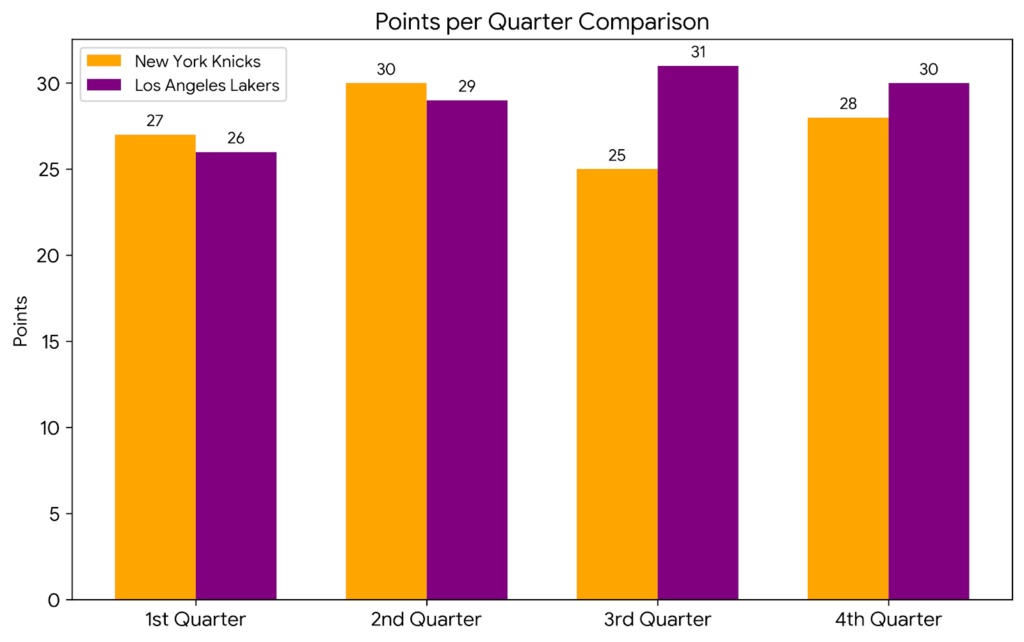
Match Score Table
| Team | 1st Quarter | 2nd Quarter | 3rd Quarter | 4th Quarter | Total |
|---|---|---|---|---|---|
| New York Knicks | 27 | 30 | 25 | 28 | 110 |
| Los Angeles Lakers | 26 | 29 | 31 | 30 | 116 |
Key Player Performances and Statistical Highlights
New York Knicks Standout Players
Several Knicks players delivered impressive performances during the matchup. Their contributions kept the game close and demonstrated the depth of the team’s roster.
Julius Randle played a crucial role in the Knicks’ offense. He consistently attacked the basket, drawing fouls and creating scoring opportunities. Randle’s physical presence allowed him to dominate rebounds and provide second-chance points.
Jalen Brunson also played an important role as the team’s primary playmaker. His ability to control the pace of the game and distribute the ball helped the Knicks maintain offensive flow. Brunson’s court vision allowed teammates to find open shots, particularly from beyond the arc.
RJ Barrett added additional scoring support. His versatility allowed him to score both inside the paint and from mid-range. Barrett’s aggressive drives forced the Lakers’ defense to collapse, opening space for other shooters.
Defensively, Mitchell Robinson provided strong rim protection. His blocks and rebounds disrupted several Lakers possessions and helped prevent easy scoring opportunities near the basket.
Overall, the Knicks showed strong individual performances, but maintaining consistent momentum proved challenging against the Lakers’ experienced roster.
Los Angeles Lakers Star Performances
The Los Angeles Lakers displayed a combination of leadership and scoring efficiency during the game. Several key players stepped up and made major contributions.
LeBron James once again demonstrated why he remains one of the most influential players in basketball. His ability to score, pass, and control the pace of the game created constant challenges for the Knicks’ defense. James contributed in multiple statistical categories, including points, assists, and rebounds.
Anthony Davis played a dominant role in the paint. His defensive presence altered numerous shots and forced the Knicks to adjust their offensive strategy. Davis also contributed offensively with efficient scoring near the basket.
D’Angelo Russell added valuable perimeter shooting. His three-point accuracy helped stretch the Knicks’ defense and create additional spacing for teammates. Russell’s scoring runs during the third quarter helped shift momentum in favor of the Lakers.
Austin Reaves provided additional playmaking and defensive energy. His hustle plays, steals, and timely baskets proved valuable in maintaining the Lakers’ lead during crucial moments.
Complete Player Statistics Breakdown
New York Knicks Player Stats
| Player | Points | Rebounds | Assists | Steals | Blocks |
|---|---|---|---|---|---|
| Jalen Brunson | 28 | 4 | 7 | 1 | 0 |
| Julius Randle | 24 | 11 | 5 | 1 | 0 |
| RJ Barrett | 20 | 6 | 3 | 1 | 0 |
| Mitchell Robinson | 8 | 12 | 1 | 0 | 3 |
| Josh Hart | 10 | 8 | 4 | 2 | 0 |
| Donte DiVincenzo | 12 | 3 | 2 | 1 | 0 |
| Bench Players | 8 | 5 | 3 | 1 | 0 |
Los Angeles Lakers Player Stats
| Player | Points | Rebounds | Assists | Steals | Blocks |
|---|---|---|---|---|---|
| LeBron James | 30 | 9 | 8 | 2 | 1 |
| Anthony Davis | 26 | 13 | 2 | 1 | 3 |
| D’Angelo Russell | 22 | 3 | 6 | 1 | 0 |
| Austin Reaves | 14 | 4 | 5 | 2 | 0 |
| Rui Hachimura | 10 | 5 | 1 | 0 | 0 |
| Bench Players | 14 | 6 | 4 | 1 | 0 |
Game Turning Points and Momentum Shifts
Third Quarter Momentum Swing
The third quarter became the defining phase of the game between the New York Knicks and the Los Angeles Lakers. Up until halftime, the matchup remained tightly contested, with both teams exchanging scoring runs and defensive stops. However, the Lakers entered the second half with greater urgency and energy, which quickly changed the pace of the game.
One of the biggest changes during this period was the Lakers’ defensive intensity. Their guards began applying stronger pressure on the Knicks’ ball handlers, forcing rushed passes and difficult shot attempts. This aggressive approach resulted in several turnovers, which the Lakers quickly converted into fast-break opportunities.
Transition basketball became the key factor in the Lakers’ third-quarter surge. Instead of slowing the game down and running half-court plays, the Lakers pushed the ball forward immediately after defensive rebounds or steals. These quick transitions caught the Knicks off guard and led to easy baskets before the defense could set up.
During a crucial stretch of the quarter, the Lakers scored three consecutive fast-break baskets. This sudden scoring burst shifted the momentum significantly. The Knicks struggled to slow down the pace and regain control, allowing the Lakers to build a noticeable lead.
Another important aspect of the momentum shift was the improvement in the Lakers’ offensive spacing. Their perimeter players moved effectively without the ball, creating open lanes for drives and passing opportunities. This movement forced the Knicks’ defense to rotate quickly, which often left shooters open around the arc.
By the end of the third quarter, the Lakers had successfully transformed a close contest into a game where they held a clear advantage heading into the final period.
Defensive Adjustments
Defense played a central role in the Lakers’ ability to control the game during the second half. A major contributor to this defensive improvement was Anthony Davis, whose presence in the paint significantly impacted the Knicks’ offensive strategy.
Davis used his length, timing, and positioning to dominate the interior defense. Whenever Knicks players attempted to drive toward the basket, Davis was ready to challenge the shot. His rim protection forced several missed attempts and discouraged aggressive drives to the paint.
Because of Davis’ defensive impact, the Knicks were forced to rely more on perimeter shooting. Instead of attacking inside, they attempted more mid-range jumpers and three-point shots. While these shots can be effective, they generally carry a lower success rate when contested.
The Lakers also made key improvements in their perimeter defense. Guards quickly closed out on shooters and applied pressure on the Knicks’ primary scorers. These defensive rotations prevented the Knicks from generating comfortable scoring opportunities from beyond the arc.
Communication between Lakers defenders improved noticeably during this phase. Players switched assignments smoothly, covered passing lanes, and supported each other during defensive rotations. This teamwork created a defensive wall that limited the Knicks’ offensive flow.
Rebounding also became an important defensive factor. By securing defensive rebounds, the Lakers prevented the Knicks from gaining second-chance points. These rebounds allowed the Lakers to immediately transition into offense and maintain the momentum they had built during the third quarter.
Overall, the Lakers’ defensive adjustments significantly disrupted the Knicks’ offensive rhythm and played a major role in the momentum shift that defined the second half.
Final Quarter Control
The final quarter showcased a strategic battle between both teams. The Knicks entered the period determined to mount a comeback and applied aggressive defensive pressure in an attempt to reduce the scoring gap.
For several minutes, the Knicks successfully increased their intensity. They forced a few turnovers and converted quick scoring opportunities that brought them closer on the scoreboard. This brief surge gave the Knicks renewed confidence and kept fans engaged as the game approached its final moments.
However, the Lakers quickly responded with calm and controlled execution. Veteran leadership from LeBron James played a key role in stabilizing the team during this critical phase. James slowed down the pace of the game and carefully organized offensive possessions.
Instead of rushing shots, the Lakers focused on patient ball movement. Passes moved around the perimeter until the best scoring opportunity appeared. This disciplined approach forced the Knicks’ defense to work harder and prevented them from creating easy transition opportunities.
Another important factor during the final quarter was clock management. The Lakers used longer offensive possessions, which reduced the amount of time available for the Knicks to complete a comeback. Each possession was carefully executed to maximize efficiency and minimize mistakes.
Free-throw shooting also became crucial in the closing minutes. As the Knicks attempted to stop the clock by committing fouls, the Lakers capitalized by converting key free throws. These points extended their lead and made it increasingly difficult for the Knicks to recover.
By controlling the tempo, executing smart offensive plays, and maintaining defensive discipline, the Lakers successfully closed out the game. Their composure and experience in high-pressure situations ultimately secured the victory in this exciting matchup.
Conclusion
The New York Knicks vs Los Angeles Lakers match player stats reveal an exciting and competitive basketball game filled with strong performances from both teams. While the Knicks showed determination and balanced scoring, the Lakers ultimately gained the advantage through experience, defensive adjustments, and clutch performances.
LeBron James and Anthony Davis led the Lakers with impressive all-around contributions. Their ability to influence both offense and defense made a major difference during crucial moments of the game. Meanwhile, the Knicks received strong efforts from Jalen Brunson and Julius Randle, who kept the contest close until the final minutes.
Basketball fans enjoy matchups like this because they highlight the importance of teamwork, strategy, and individual talent. Every possession matters, and small moments can change the outcome of a game.
As both teams continue their season, performances like this demonstrate why they remain exciting teams to watch in the NBA. Future matchups between the Knicks and Lakers will undoubtedly bring more thrilling moments and impressive statistics for fans to analyze and enjoy.
FAQs
1. Who were the top scorers in the Knicks vs Lakers game?
LeBron James led the Lakers with 30 points, while Julius Randle led the Knicks with 24 points. Both players played pivotal roles in their team’s offensive performance.
2. How did the third quarter impact the game?
The third quarter was decisive as the Lakers increased defensive pressure, forced turnovers, and scored multiple fast-break points. This shift allowed the Lakers to gain momentum and take control of the game.
3. Which players stood out defensively?
Anthony Davis anchored the Lakers’ defense with strong rim protection, while Mitchell Robinson provided key shot-blocking and rebounding for the Knicks. Both were crucial in limiting easy scoring opportunities.
4. How did bench players contribute?
Bench players like Josh Hart and Donte DiVincenzo for the Knicks, and Rui Hachimura and Austin Reaves for the Lakers, contributed with rebounds, assists, steals, and scoring support, helping maintain team balance.
5. What were the key stats for assists and rebounds?
Jalen Brunson led the Knicks in assists with 7, while LeBron James had 8 assists for the Lakers. Anthony Davis had 13 rebounds, while Mitchell Robinson secured 12 rebounds, showcasing their dominance on the boards.
Visit Magazineidea for more blogs.